Projects
Our projects: Advancing Health, Advocacy, and Community Empowerment
SEXUAL REPRODUCTIVE HEALTH PROJECT -(June 2026 – July 2027): - Strengthening the Inter-Faith Led Model for Sexual and Reproductive Health (SRH) in Uganda and Across East Africa
PROJECT DETAILS:
Funded by: The David and Lucile Packard Foundation
Focus: the project focuses on Strengthening the Inter-Faith Led Model for Sexual and Reproductive Health (SRH) in Uganda and Across East Africa
The expected outcomes include:
- Documented 3FHi's inter-faith Sexual Reproductive Health(SRH) model
- Faith-based Sexual Reproductive Health (SRH) actors across East Africa mapped for strategic partnership.
- Inter-Faith Alliances for Health strengthened in 31 districts.
- 3FHi's institutional capacity enhanced for sustainability, and improved (Sexual Reproductive Health)SRH outcomes and domestic investment across target districts.
Coverage: 31 districts in Uganda, with mapping across Kenya, Tanzania, Uganda and Rwanda
Advancing Self-Care: Follow-on Support for Implementation of Action Plans and Technical Assistance in Monitoring Inter-Faith and cultural Champions Across 10 Districts (July- October 2026)
PROJECT DETAILS:
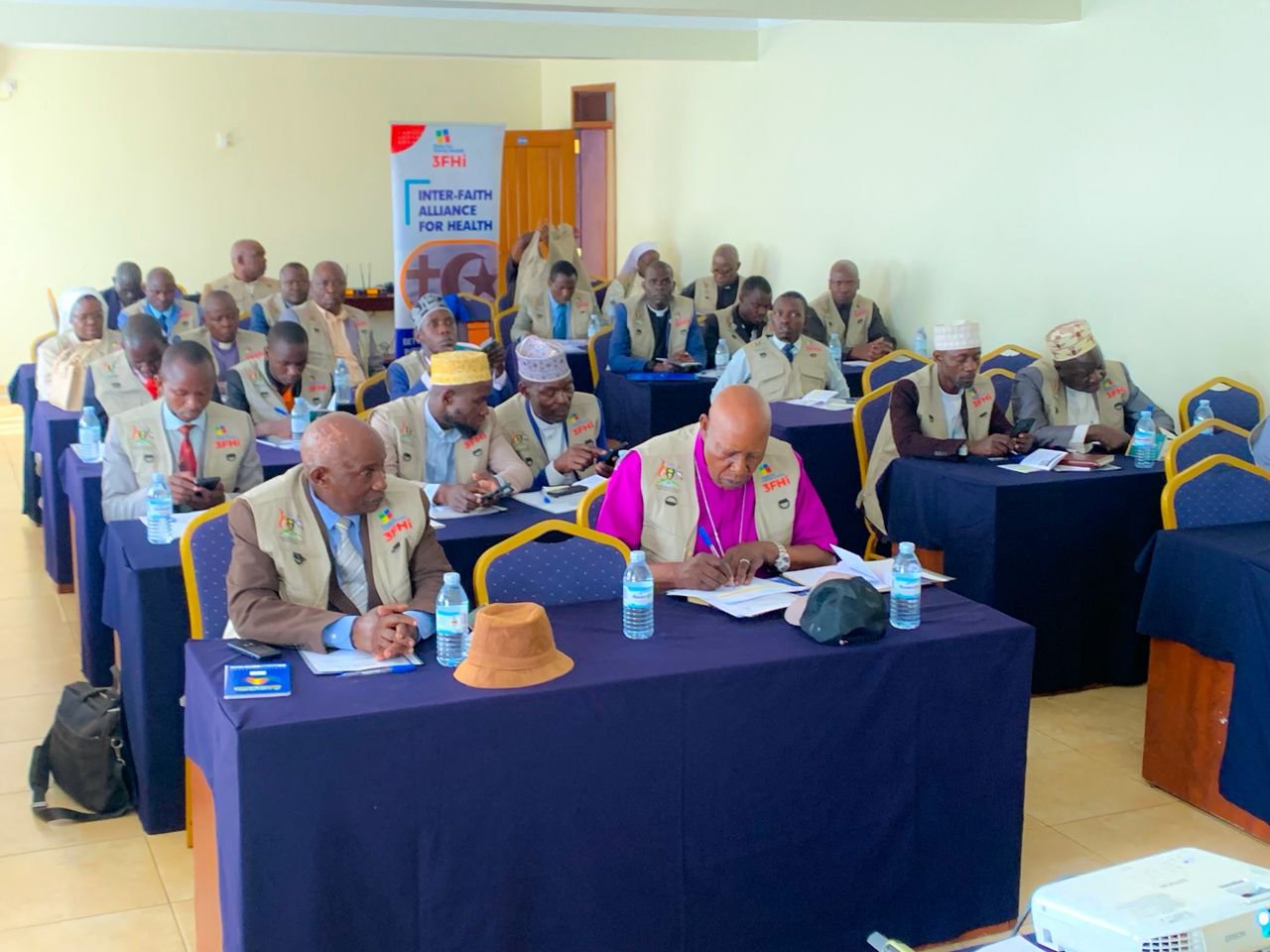
Funded by: the Ministry of Health (MoH) in collaboration with Makerere University School of Public Health and Faith for Family Health Initiative (3FHi),
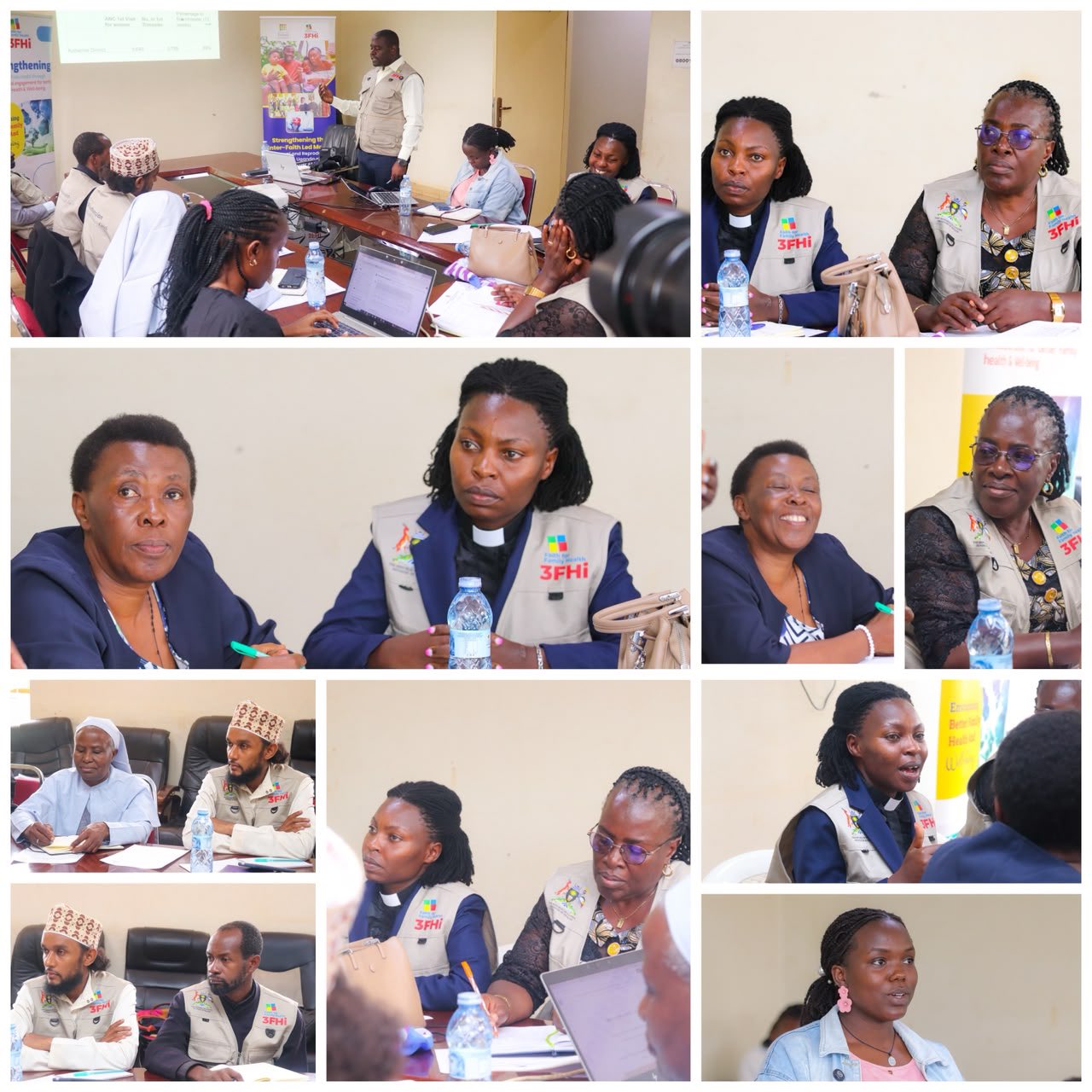
Focus: To empower trained inter-faith religious leaders, cultural leaders, and their respective structures across 10 focus districts to advance self-care adoption through targeted action plan support, capacity strengthening, and community-level workplan execution—focusing on Family Planning, ANC, NCDs, and Adolescent Health.
Coverage: National Level and Jinia, Tororo, Butaleja,Ngora, Mbale, Budaka, Bugiri,Pallisa,Busia ,Namutumba.
Key Outcomes:-
Disseminated Self-Care Framework: The National Inter-Faith Self-Care Task Force will disseminate the reviewed Self-Care Handbook and IEC materials. To date, 30 interfaith religious and cultural leaders have reviewed and enriched the National Self-Care Handbook, ensuring its content resonates with community cultural and religious beliefs.
-
Strengthened Capacity of Inter-Faith Champions: Build upon the initial pool of 69 mapped and trained interfaith champions by refreshing and equipping at least 100 leaders across 10 districts with practical self-care tools on ANC, NCD prevention, nutrition, adolescent health, and self-testing.
-
Operational District-Level Action Plans: Review and operationalize comprehensive 2026–2027 district action plans, ensuring trained champions continuously educate and mobilize their congregations to adopt self-care practices.
-
Increased Community Awareness and Practice: Drive community-level uptake and document impact through 10 targeted radio broadcasts, distributed IEC materials, social media campaigns, and structured M&E tracking (sermon logs and referrals).
UZAZI SALAMA PROJECT - August 2025– November 2028): -Enhancing the maternal and Reproductive Health of Adolescent Girls and Young Women.
PROJECT DETAILS:
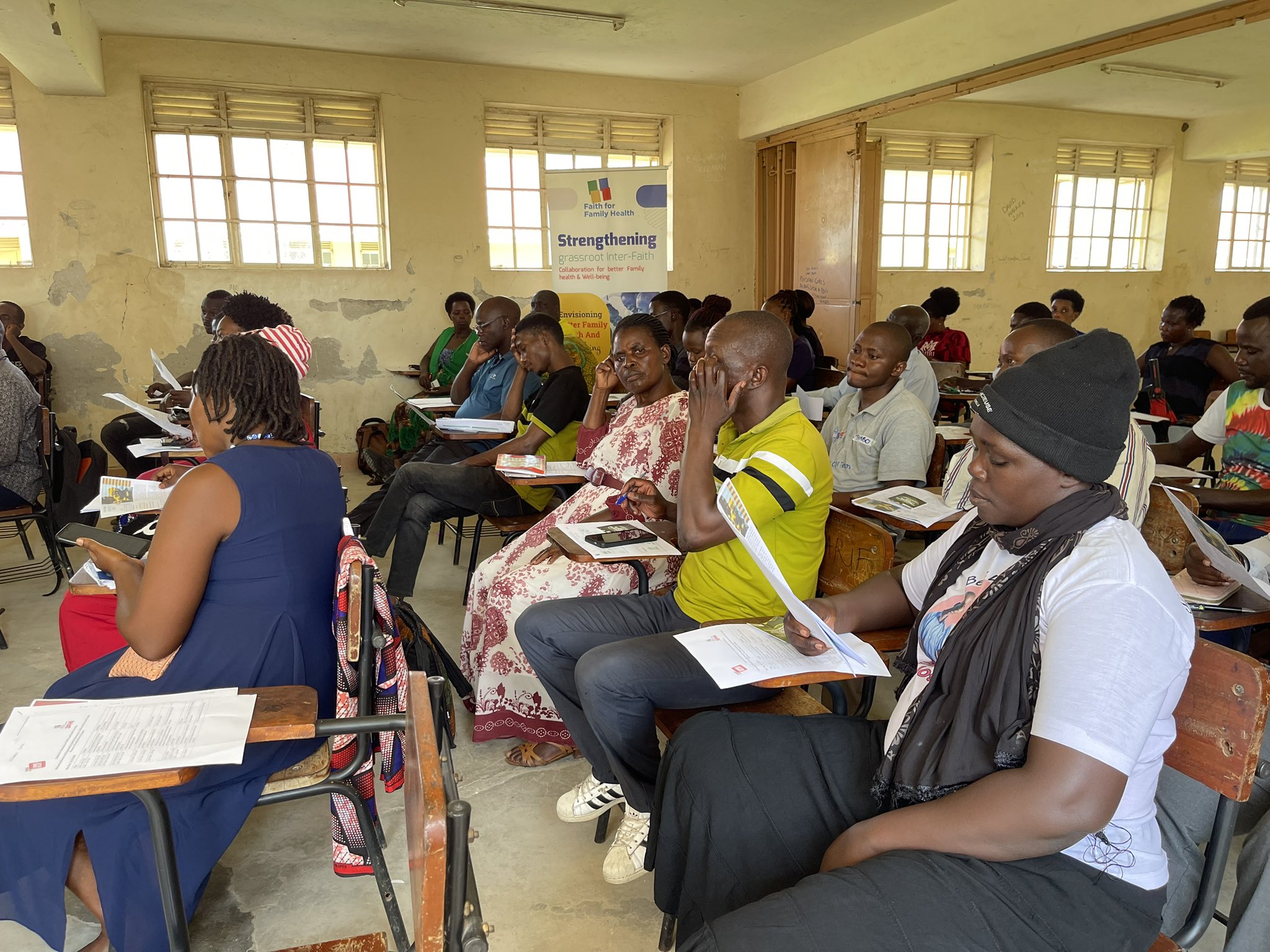
Funded by: COMIC RELIEF
Focus: the project focuses on Enhancing Maternal and Reproductive
Health of Adolescent Girls and Young Women in Uganda specifically in Ntoroko district.
The expected outcomes include:
• Increased climatic risk preparedness and adoption of community-led and owned
climate risk adaptation and mitigation plans
• Enhanced community accountability and advocacy on Adolescent Girls, and
Young Women (AGYW) RMNCAH service delivery
• Increased quality RMNCAH services and uptake by AGYW
Coverage: Ntoroko district (Kanara)
Results
• Declines in teenage pregnancies, GBV, maternal deaths, unsafe behavior and
complications.
• Improved AGYW Maternal and Reproductive policy environment, better policy
implementation and monitoring, increased domestic revenue mobilization,
allocation.
• Climate–resilient health systems that ensure inclusive and quality AGYW RMCAH
service delivery
• Empowered AGYW who can effectively avoid or navigate the Ntoroko–specific
social, cultural, and structural challenges.
Institutionalization of Selfcare in Uganda’s Communities (Sept- Dec 2025)
PROJECT DETAILS:
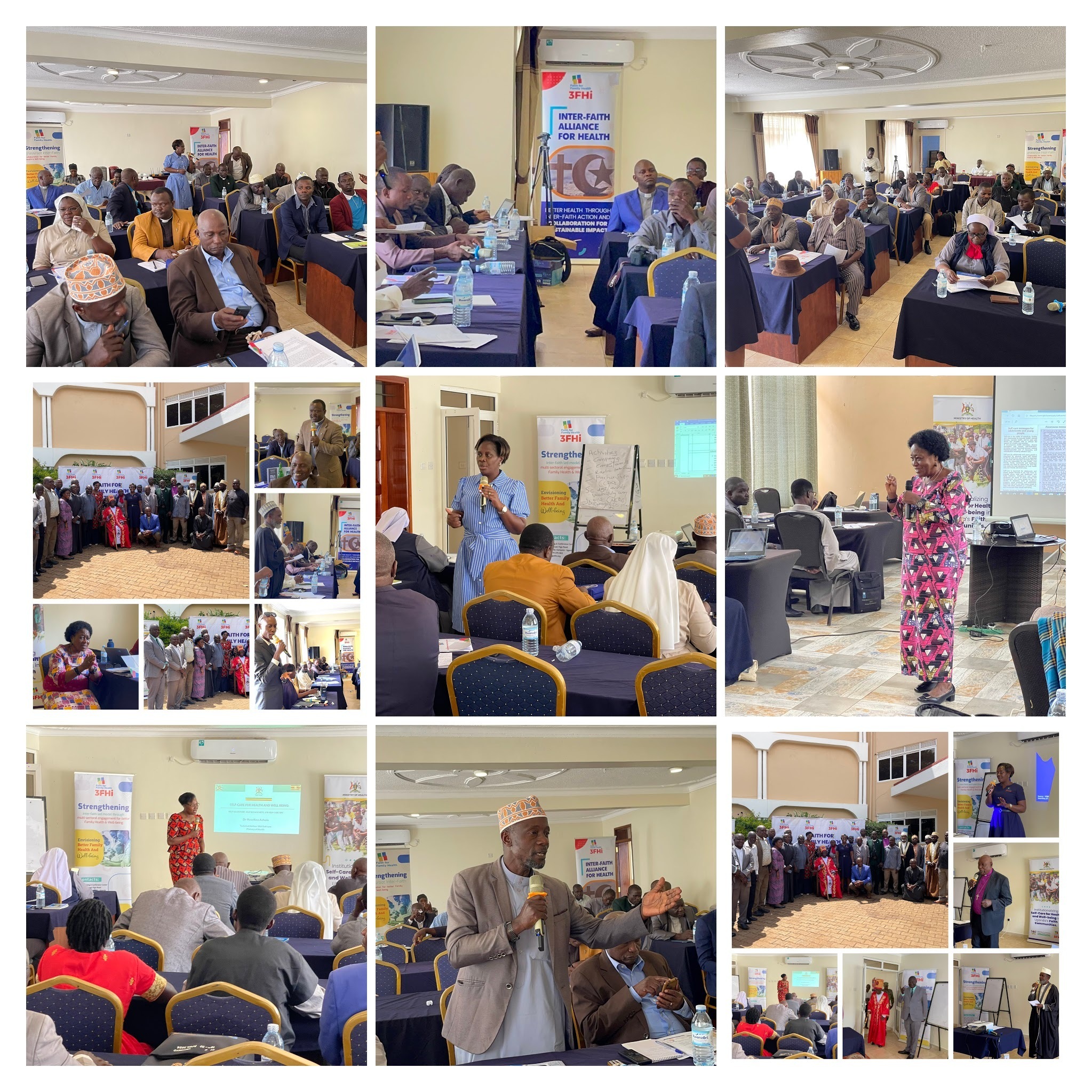
Funded by: the Ministry of Health (MoH) in collaboration with Makerere University School of Public Health and Faith for Family Health Initiative (3FHi),
Focus: To strengtheN the integration of self-care practices into faith and community structures across 10 districts in eastern Uganda.
Coverage: National Level and Jinia, Tororo, Butaleja,Ngora, Mbale, Budaka, Bugiri,Pallisa,Busia ,Namutumba.
Key Outcomes:- 30 interfaith religious and cultural leaders reviewed and enriched the National Self-Care Handbook, ensuring that its content resonates with the cultural and religious beliefs of communities.
- A pool of 69 interfaith religious and cultural leaders from 10 districts was mapped and trained on core self-care principles.
- Trained champions developed and are implementing district-specific action plans to educate and mobilize communities to adopt self-care practices.
Equity Accelerator Fund: AdvancingRoutine Immunization in Wakiso -Faith for Family Health initiative(3FHi) Project
PROJECT DETAILS:
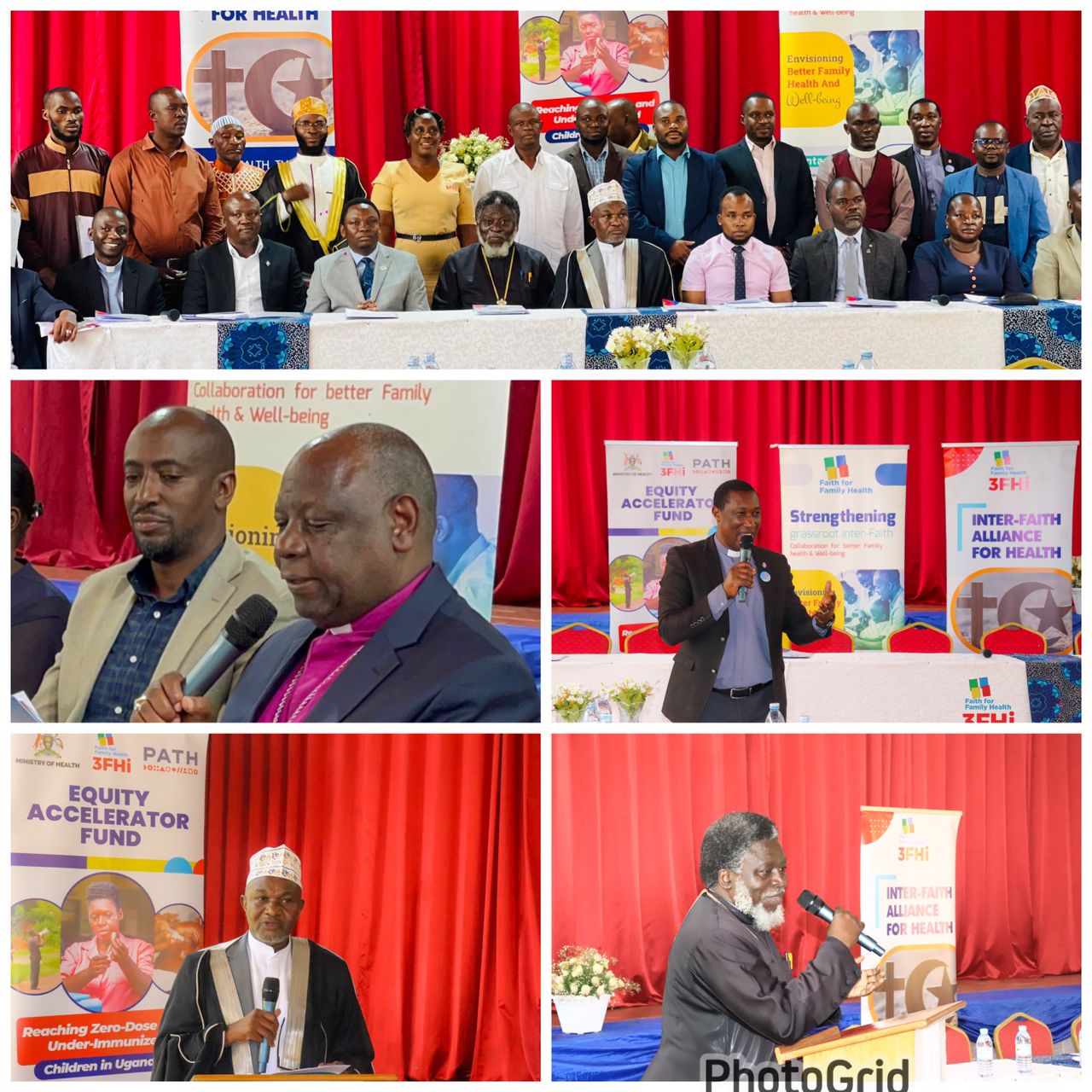
Funded by: PATH Uganda (GAVI EAF)
Focus: To contribute to MOH/UNEPI’s target of achieving 95% immunization coverage for all antigens and reduce the number of under-immunized and zero-dose children in Uganda. Leveraging an interfaith-led model and multi-sectoral collaboration, 3FHi will mobilize community, religious,and cultural structures to increase immunization uptake aligning with the Uganda National Expanded Programme on Immunization (UNEPI) goals.
Coverage: Wakiso
Key Outcomes:
Secured strong buy-in from national and district-level interfaith religious and cultural leaders, who committed to integrating immunization messages into
sermons, counseling, and community gatherings—affirming immunization as both a public health and spiritual imperative.
Reviewed, adapted, and finalized culturally and religiously sensitive IEC materials, including sermon guides (Christian and Muslim), fact sheets for 14
vaccine-preventable diseases, and key messages supported by scripture.
Identified and mapped over 390 multi-sectoral champions (exceeding the target of 200), including last-mile actors in high-risk areas such as fishing communities,
refugee settlements, urban slums, markets, and remote islands.
Trained 347 champions to mobilize communities and do house-to-house mapping to identify and refer Zero-dose and under-immunized children. Re-tooled 65 interfaith
religious and cultural leaders on immunization basics, gender-related barriers, myths/misconceptions, and household profiling—empowering them to address
vaccine hesitancy and promote shared parental responsibility.
Formed 10 multi-sectoral community networks across sub-counties, town
councils, and divisions to coordinate sustained advocacy and mobilization.
Champions mobilized communities to attend 27 community outreaches.Outreaches reached 550+ people with accurate immunization information, shifted
attitudes and intent to immunize children of more 87% of those reached with information
From the outreaches, household mapping, and referrals, 259 Zero Dose (ZD) and 547 under-immunized (UIC) children were identified. 72% of ZD and 54% of
UIC were Vaccinated 72%. This contributed to 33% reduction in the estimated number of zero children in Wakiso district
In the outreaches, 753 children received scheduled doses. There was a significant
catch-up vaccination in Bussi subcounty, where 199 children received their scheduled vaccination, along with 17 ZD and 55 UIC. Additionally, 264 community members received different OPD services
Reached refugee communities through 5 dedicated outreaches reaching 188 community members, including 42 refugees, with immunization messages and received different Health services. The outreaches also identified key barriers and solutions to immunization uptake among refugee communities. 259 children received their scheduled immunization, 14 zero-dose children, and 10 underimmunized children..
Facilitated 31 community dialogues, which identified 43 immunization barriers and enabled communities to co-create context-specific solutions. Additionally,
17 gender-focused dialogues were conducted to address male involvement and harmful gender norms affecting immunization uptake
Community mobilization led by trained interfaith leaders and multi-sectoral networks strengthened demand for immunization, built community trust, and improved service acceptance; contributing to a significant increase in MR1 coverage from 76% to 91% and MR2 coverage from 29% to 37%..
Impact: Increased Awareness and Acceptance: Reduced vaccine hesitancy through community-driven education, improving knowledge and trust in immunization services.
Strengthened Advocacy: inter-faith and multi-sectoral champions trained to mobilize communities, boosting demand for vaccines.
Enhanced Coordination: Improved collaboration among CSOs, local government, and health facilities, driving higher immunization coverage.
Reduced Zero-Dose and Under-Immunized Children: Contributes to achieving 95% coverage for all antigens, addressing the estimated 478,834 ZD children in Wakiso.
Improved Service Integration: Strengthened primary healthcare systems, ensuring equitable access to immunization for underserved populations, including refugees and urban poor.
PROJECT DETAILS:
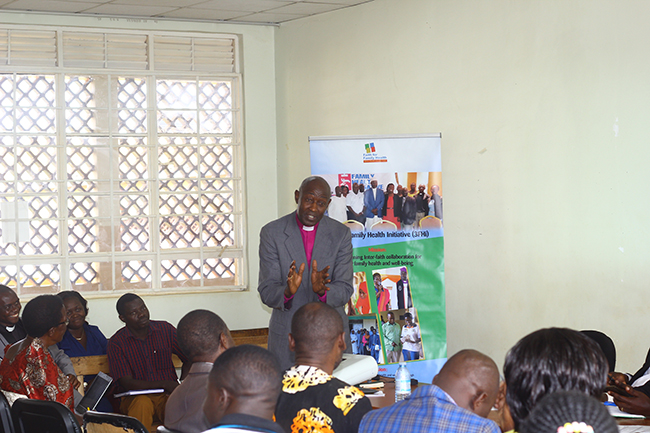
Funded by: Bill and Melinda Gates Foundation (BMGF) through Population Action International (PAI)
Focus: Strengthening the capacity of 8 strategic faith-based
organizations to advocate for prioritization and increased family planning investments in the district
Coverage: Mubende, Mityana, Kyenjojo, Kagadi, Kabarole, Namayingo, Busia, and Iganga
Key Outcomes: Development of 7 Family Planning (FP) Costed Implementation Plans; establishment of 7 FP Technical Working Groups (TWGs); mobilization of over USD 200,000 for FP interventions from district budgets; creation of dedicated FP budget lines in each district.
Impact: Establishment of dedicated family planning budget lines in each of the eight districts institutionalized the funding, providing a sustainable mechanism for ongoing support to family planning initiatives.
Enhanced access to family planning services, contributing to improved
reproductive health outcomes for women, children, and adolescents in
the regions.
Accelerated and Sustained Advocacy Action on FP2020 Commitments (ASAP) (March 2019 - April 2020)
PROJECT DETAILS:
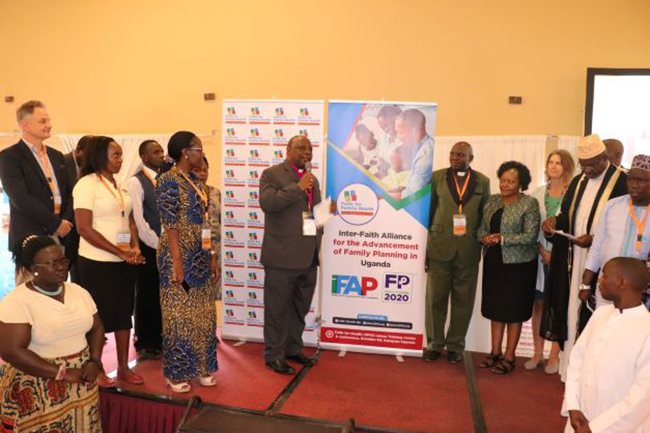
Funded by: UN Foundation/FP2020
Focus: Strengthened the capacity of 8 strategic faith-based organizations to engage national decision-makers for FP2020 commitments.
Coverage: National level
Outcome: Formation of the Interfaith Alliance for the Advancement of Family Planning (IFAP) to coordinate advocacy for Family planning (FP) financing and policy at the national level.
Impact: By leveraging their collective influence, IFAP amplified the voice of faith leaders in national Family planning (FP) discourse, ensuring that FP remains a priority on Uganda's health agenda. This alliance promoted increased domestic funding for FP, aligning with national and global commitments, and nurturing a supportive policy environment for FP services, thus improving access to family planning for women, adolescents, and families across the country.
Expenditure Count: Advancing Family PlanningAccountability Dialogues (December 2019 - December2020)
PROJECT DETAILS:
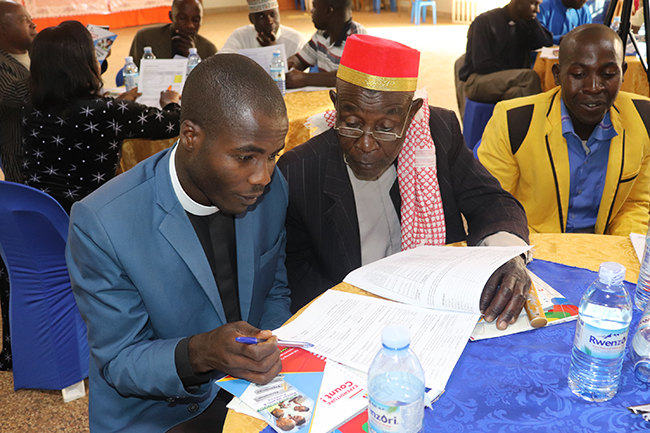
Funded by: Bill and Melinda Gates Foundation (BMGF) through the New Venture Fund.
Focus: advanced family planning budget accountability dialogues in Mityana and Kyenjojo districts
Coverage: Mityana and Kyenjojo
Impact: Advanced budget accountability dialogues, leading to improved disbursement and accountability of FP funds, and increased efficiency in FP service delivery. Marked improvement in the efficiency of family planning service delivery, ensuring that allocated funds reached the intended health interventions. This initiative enhanced trust between communities and
local governments, leading to more responsive and sustainable family planning services.
Adolescent Policy Project (APP) (October 2020 - January 2022)
PROJECT DETAILS:
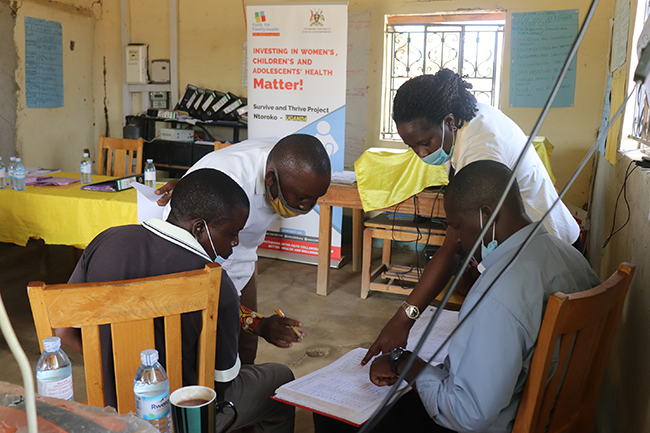
Funded by: Population Action International (PAI)
Focus: improving transparency and oversight in the use of family
planning (FP) funds.
Coverage: Ntoroko, Ibanda, Namayingo, Kyenjojo
Outcome: Through dialogues, local stakeholders, including government
officials, service providers, and community representatives, were able to
hold decision-makers accountable for the effective disbursement and
utilization of FP resources.
Development of teenage pregnancy prevention frameworks,
establishment of multi-sectoral technical working groups, and creation
of youth-friendly centers in the districts.
Impact:
A clear improvement in the efficiency of family planning
service delivery, ensuring that allocated funds reached the intended
health interventions. This initiative enhanced trust between
communities and local governments, leading to more responsive and
sustainable family planning services.
A 23.7% budget increase in support of WCAH was realized.
A 33.6% budget increase for health was also secured.
A pool of health and WCAH champions comprising of faith and community leaders as well as media and CSO was created.
The District LG prioritized WCAH in their Covid 19 responses.
Youth Action Programme on Ending Teenage Pregnancy
PROJECT DETAILS:
Description Summary
Funded by : Population Action international through the Faith Fund.
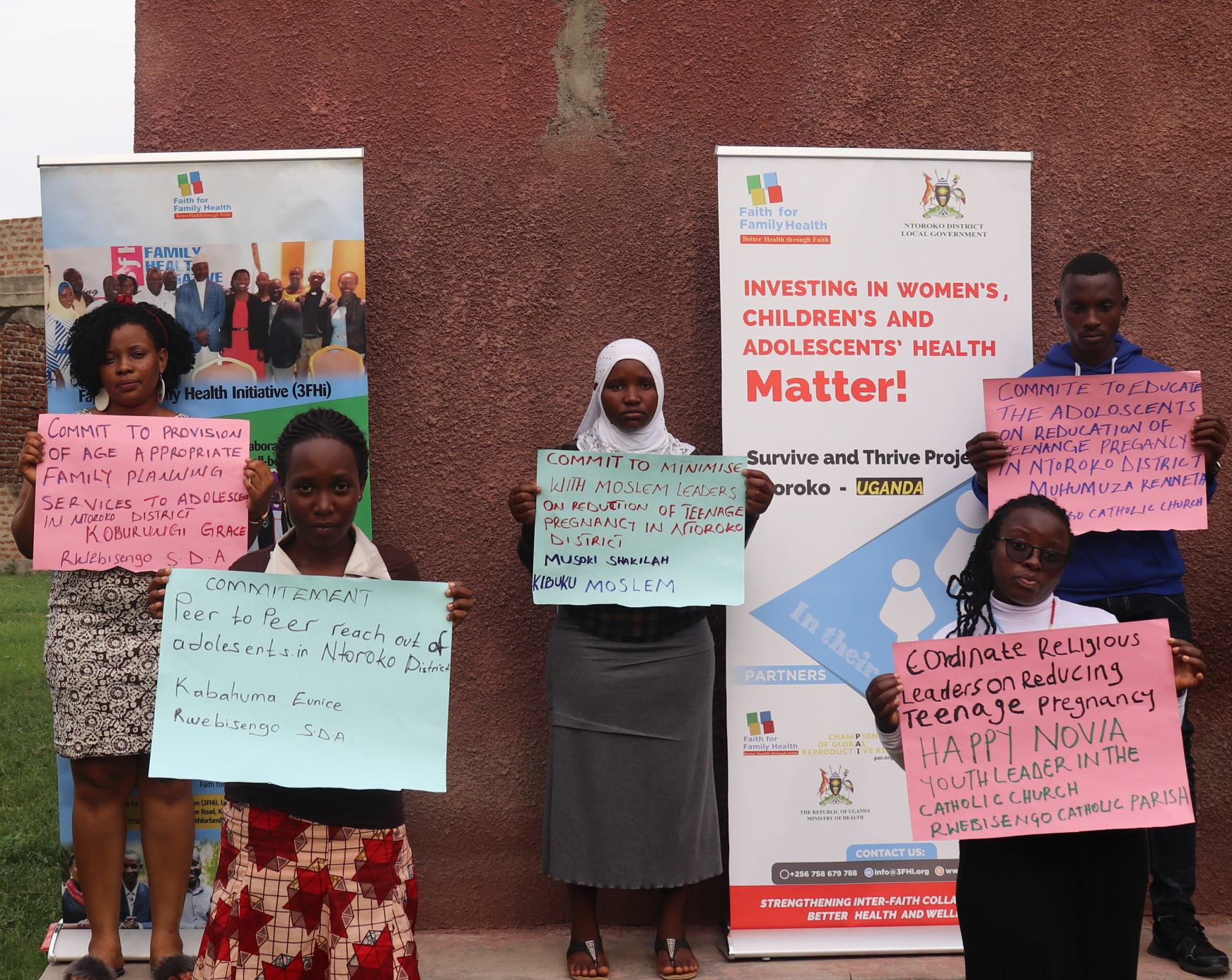
Focus: The project engaged in evidence generation, youth organizing, champions building, and advocacy engagements with the district decision makers towards taking policy decisions and actions to prevent teenage pregnancy, as well as mitigate its impacts.
Coverage: Ntoroko
Outcomes: Teenage Pregnancy Data sheet was developed
Impacts:
- Adolescent and youth champions were mobilized and facilitated to engage decision makers on ending teenage pregnancy.
- Policy commitments to ending teenage pregnancy were secured and acted on.
Thrive Project Phase 1 (September 2020 - August 2021)
PROJECT DETAILS:
Focus: To monitor Reproductive, Maternal, new-born, child and adolescent health plus nutrition (RMNCAH+N) indicators, targets and commitments in Ntoroko district.
Coverage: Ntoroko District
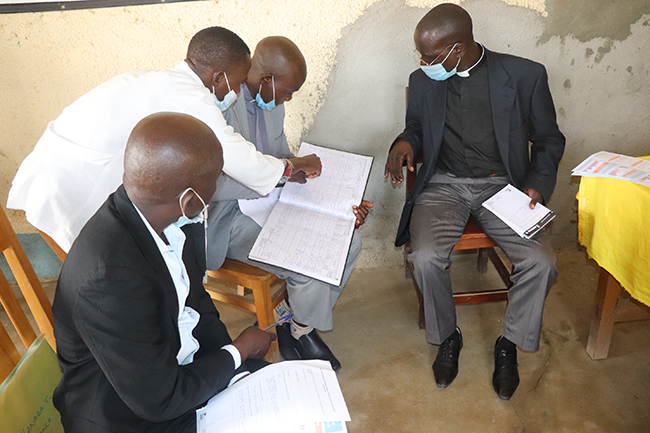
Key Outcomes: Religious leaders monitored the allocation, disbursement, and expenditure of GFF/RBF funds for RMNCAH+N services. The district council committed funds to RMNCAH+N. The district council made a commitment to allocate dedicated funds to support RMNCAH+N services, marking a significant policy shift and a stronger financial commitment to maternal and child health.
Impact: This initiative in Ntoroko District empowered religious leaders to actively monitor the allocation, disbursement, and expenditure of GFF/Results-Based Financing (RBF) funds for Reproductive, Maternal Newborn, Child, and Adolescent Health and Nutrition (RMNCAH+N)services. Their involvement ensured greater transparency and accountability in the use of health funds, leading to more effective service delivery. Strengthened collaboration between religious leaders and local government enhanced the sustainability of health interventions in the district.
LEVERAGE Project (June 2023 - May 2024)
PROJECT DETAILS:
Funded by: Global Financing Facility (GFF)/World Bank through PAI
Focus: To support the implementation of the RMNCAH+N sharpened
plan and investment case through social accountability, by enhancing
the capacity of CSOs in social accountability, advocacy, and equity
through a unified voice.
Coverage: National level
Impact: Strengthened the Reproductive Maternal Newborn, child and
adolescent health, nutrition and health ageing (RMNCAAH+N) platform,
facilitated the reallocation of GFF/WB funds for Family Planning
commodity procurement, and developed a digital resource hub for
RMNCAH+N commitments and policy tracking.
PROJECT DETAILS:
Funded by: USAID/Uganda through Civil Society Strengthening Activity (CSSA)
Focus: To strengthen 3FHi’s institutional and advocacy capacity.
Coverage: National level
Outcomes: Strengthened governance, financial, and advocacy capacity of 3FHi, enhancing institutional resilience and sustainability.
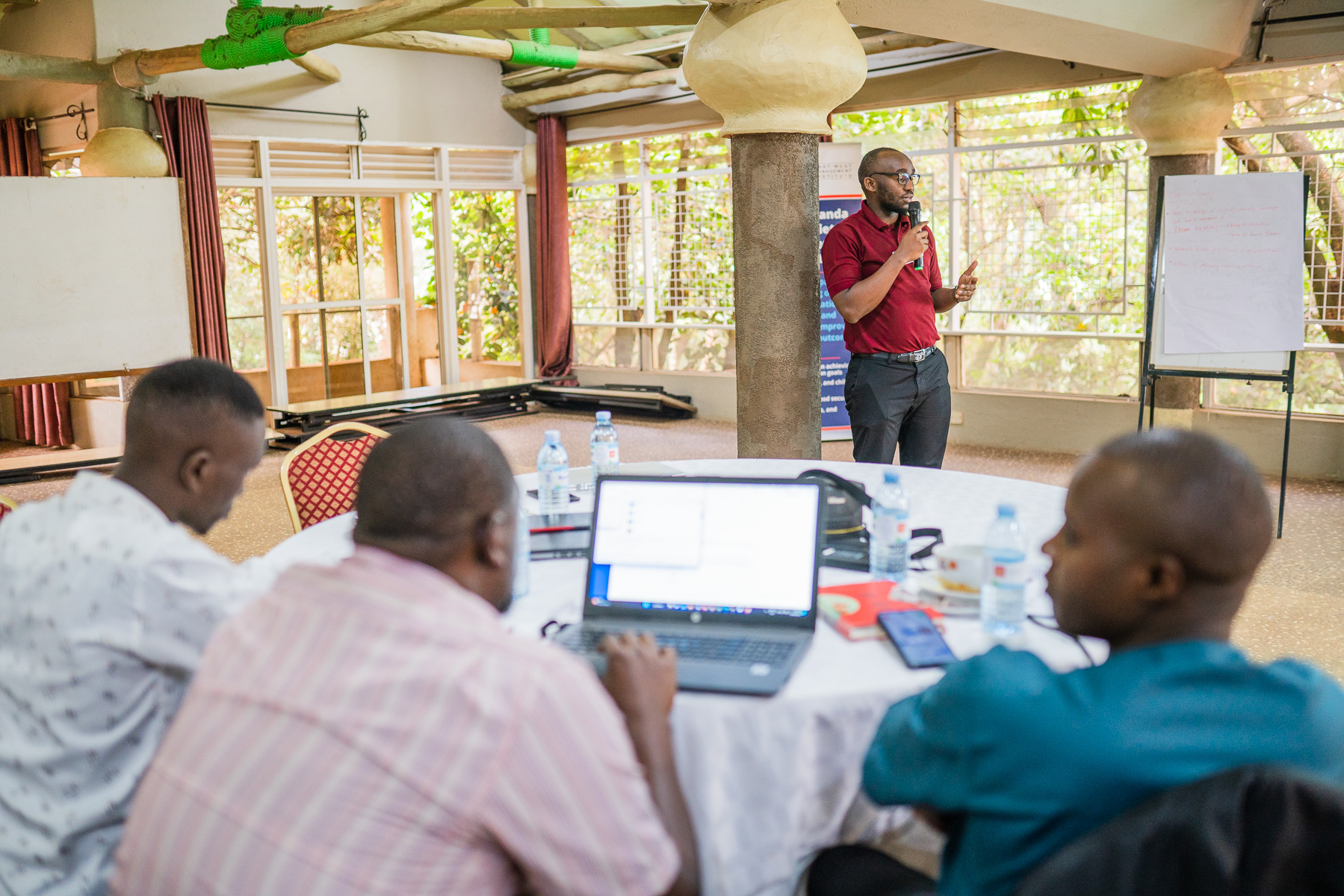
Impact: The project enhanced the governance, financial, and advocacy capacity of Faith for Family Health initiative (3FHi). By focusing on key institutional areas, the initiative fortified 3FHi’s internal structures,
improving its ability to operate effectively and sustainably in a rapidly changing environment. The strengthened governance framework improved decision-making processes, ensuring better alignment with the organization's mission and strategic goals. Enhanced financial capacity allowed 3FHi to manage resources more
efficiently and attract additional funding. These improvements increased 3FHi’s institutional resilience and
sustainability, positioning it as a stronger partner within the health sector and enhancing its ability to drive impactful, long-term interventions for women, children, and adolescents across Uganda.
Her Diary Project- To secure policy commitments to ending Gender Based Violence (GBV), increase conversation and visibility of the Generation Equality Forum.
PROJECT DETAILS:
Funded by: New Venture Fund
Focus: Documented gender-based violence (GBV) experiences and secured policy commitments towards ending GBV through national dialogues and media campaigns.
Coverage: Kampala
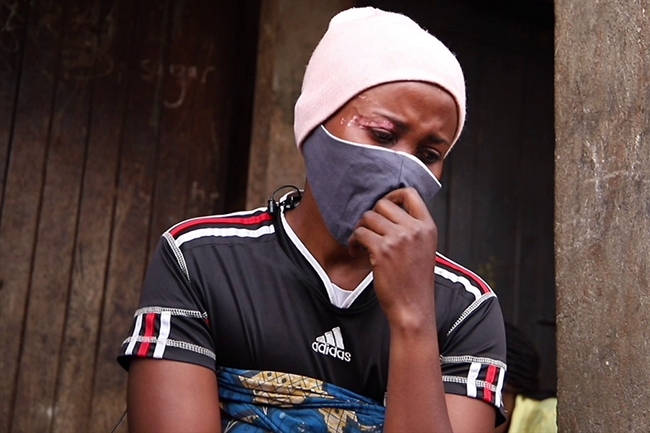
Impact : By capturing real-life stories of those affected by GBV, the initiative
helped to humanize and amplify the urgency of ending violence against
women and girls.
The project raised public awareness and mobilized communities to join
the fight against GBV, fostering a nationwide shift towards zero
tolerance. These efforts collectively contributed to creating a more
responsive and accountable framework for addressing GBV, influencing
national policies aimed at preventing violence, supporting survivors, and
ensuring justice for those affected.
Advancing Family Planning Policy and Budget Advocacy (February 2021 - August 2023)
PROJECT DETAILS:
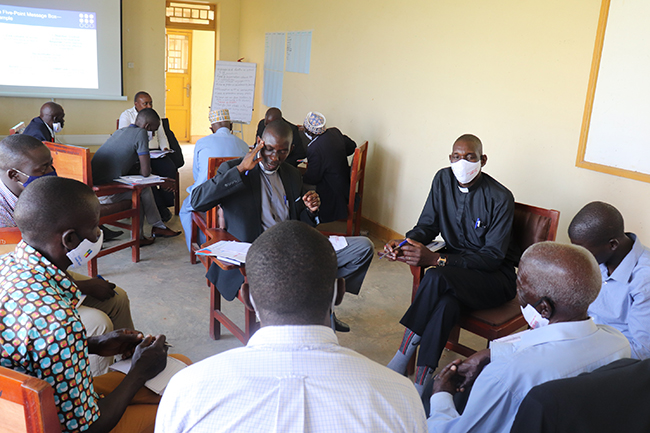
Funded by: USAID/Uganda through Pathfinder Uganda
Focus: To advance policy and budget advocacy at national level and in
the 11 districts of Buliisa, Butambala, Bundibugyo, Kiryandongo, Kibaale,
Kyankwanzi, Kyegegwa, Kyenjojo, Ntoroko, Gomba and Rakai.
Coverage: 11 districts including of Buliisa, Butambala, Bundibugyo,
Kiryandongo, Kibaale, Kyankwanzi, Kyegegwa, Kyenjojo, Ntoroko,
Gomba and Rakai
Key Achievements: Trained 231 champions (66 inter-faith and cultural
leaders, 110 district political leaders, 15 members of parliament and 40
media personalities) on FP advocacy; facilitated FP budget allocations
totaling 37.12 million UGX in 10 focus districts.
These trained leaders became vital voices in their communities and
platforms, promoting family planning awareness and generating
political will to support FP initiatives.
Thrive Project Phase 2 (September 2021 - August 2022)
PROJECT DETAILS:
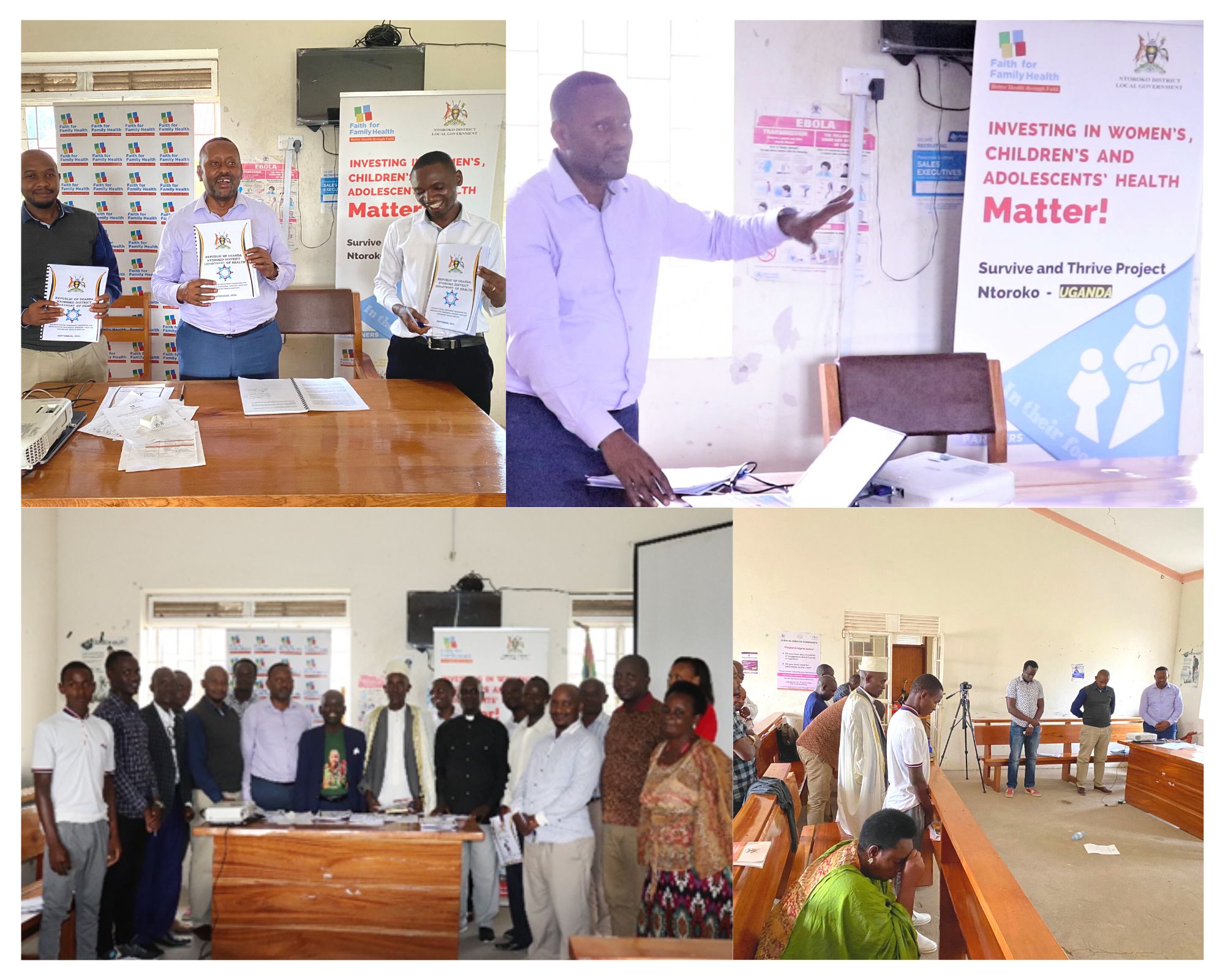
 Funded by: World Bank/GFF through PAI
Focus: To develop Reproductive, Maternal, Newborn and Adolescent
Health RMNCAH Investment Framework (ReIF) and build civil society
organizations coalition.
Coverage: Ntoroko District
Key Outcomes: Development of a Reproductive, Maternal, Newborn,
and Adolescent Health (RMNCAH) Investment Framework;
strengthened CSO coalition for budget and policy advocacy.
Impact: This framework provided a structured approach for prioritizing
health investments, ensuring that limited resources were allocated
effectively to improve RMNCAH outcomes.
Strengthened the civil society organization (CSO) coalition in the
district, enhancing their capacity for budget and policy advocacy. This
empowered CSOs to engage more actively with local government and
decision-makers, successfully advocating for increased funding and
policy reforms to support RMNCAH services.
Greater accountability and commitment to improving health outcomes
for women, children, and adolescents, contributing to long-term health
system strengthening in the district.
Track It! Project (August 2022 - October 2023)
PROJECT DETAILS:
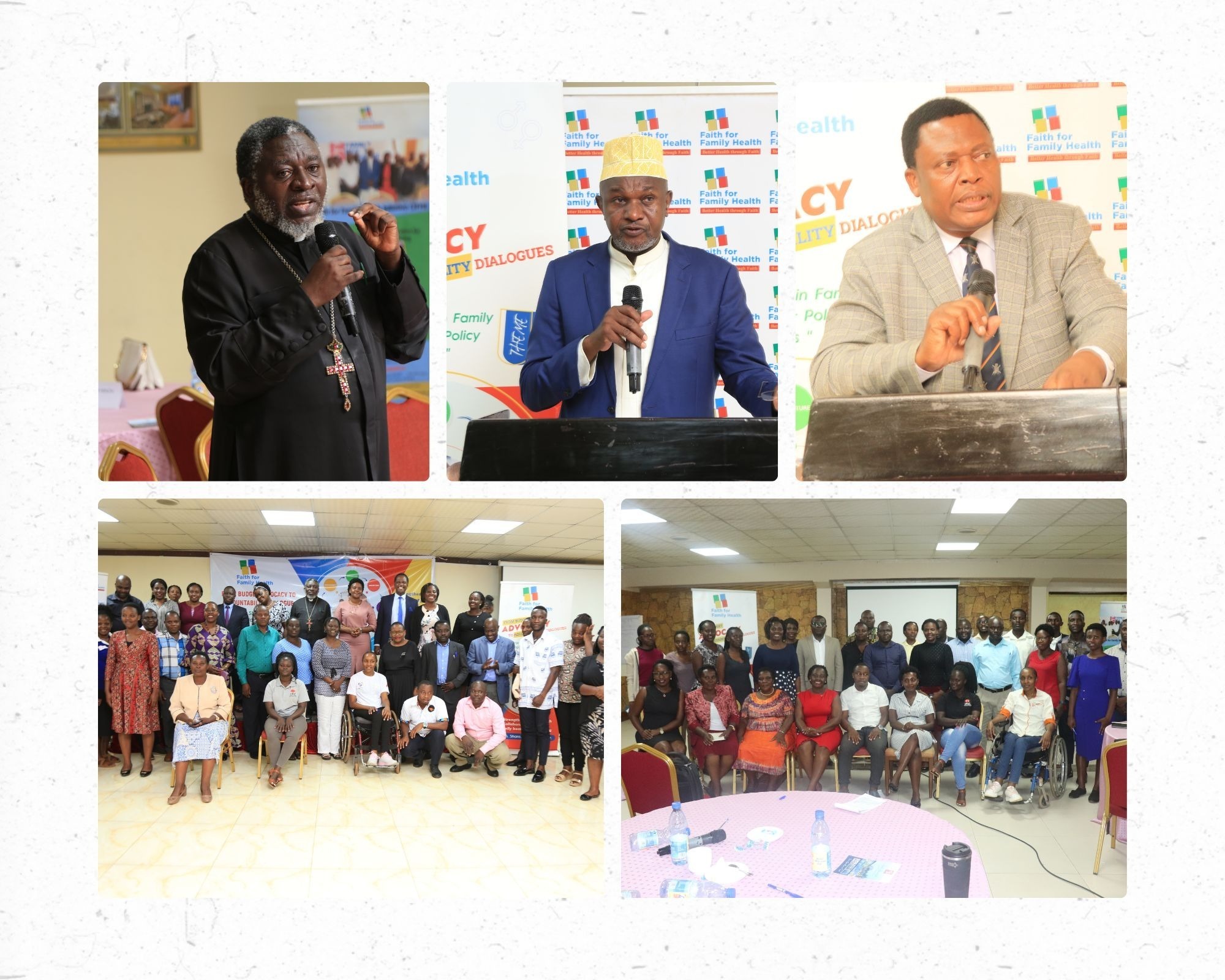
Funded by: Reproductive Health Supplies Coalition (RHSC)
Coverage: National level
Outcomes: Created the Joint Advocacy and Accountability Strategy (JAS) and strengthened CSO capacity in advocacy, resulting in policy shifts towards family planning investments.
Impact: The project facilitated notable policy shifts toward family planning investments, ensuring greater prioritization of reproductive health in district and national budgets. By enhancing CSO capabilities.
The project enabled sustainable advocacy, fostering a long-term commitment to improving access to FP services Increased engagement from decision-makers, paving the way for enhanced resource allocation and impactful reproductive health outcomes in Uganda.